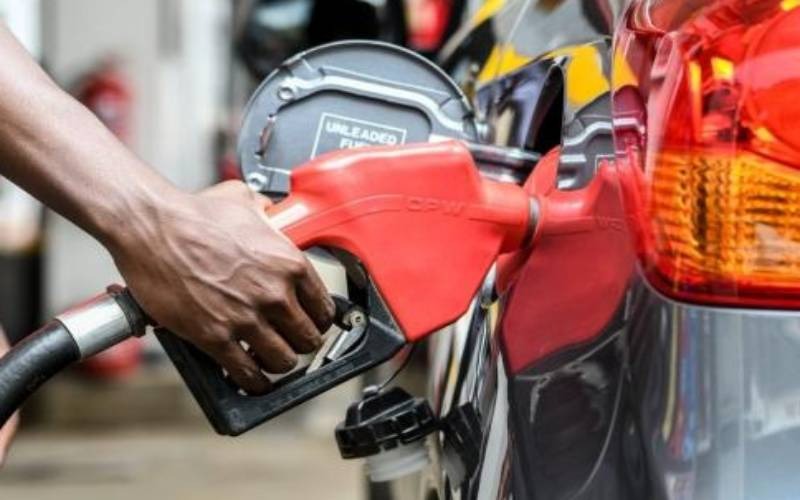
The Energy and Petroleum Regulatory Authority (EPRA) has kept fuel prices unchanged for the next month, offering motorists and households some relief despite continued fluctuations in global oil markets.
In a statement released on Sunday, EPRA said the maximum retail prices for Super Petrol, Diesel and Kerosene will remain the same from December 15, 2025, to January 14, 2026.
The regulator explained that the decision was made “in accordance with Section 101(y) of the Petroleum Act 2019 and Legal Notice No.192 of 2022,” following its routine monthly review of international prices, landed costs and the exchange rate.
“In the period under review, the maximum allowed petroleum pump prices for Super Petrol, Diesel and Kerosene remain unchanged,” EPRA said.
Under the new price cap, motorists in Nairobi will continue to pay up to Sh184.52 per litre of Super Petrol, Sh171.47 for Diesel and Sh154.78 for Kerosene. In Mombasa, Super Petrol will retail at a maximum of Sh181.24 per litre, Diesel at Sh168.19 and Kerosene at Sh151.49. Nakuru residents will pay up to Sh183.56 for Super Petrol, Sh170.87 for Diesel and Sh154.21 for Kerosene.
In Eldoret, the maximum pump prices are set at Sh184.38 per litre for Super Petrol, Sh171.68 for Diesel and Sh155.03 for Kerosene, while Kisumu motorists will pay the same rates of Sh184.37 for Super Petrol, Sh171.68 for Diesel and Sh155.03 for Kerosene.
The authority noted that movements in global fuel prices were mixed, but their impact on local pump prices was cushioned by taxes already built into the pricing formula and a relatively stable shilling.
EPRA said the current prices “are inclusive of the 16% Value Added Tax (VAT) in line with the provisions of the Finance Act 2023, the Tax Laws (Amendment) Act 2024 and the revised rates for excise duty adjusted for inflation.”
Figures released by the regulator show that the average landed cost of Super Petrol dropped by 4.25 percent, from US$619.14 per cubic metre in October to US$592.84 in November 2025. However, the cost of Diesel rose by 3.02 percent to US$654.24 per cubic metre, while Kerosene increased by 5.52 percent to US$667.05 per cubic metre over the same period.
EPRA explained that Kenya relies entirely on imported, refined petroleum products, which are priced using international benchmarks.
“Currently, Kenya imports all its petroleum product requirements in refined form and the products are traded in international markets based on a pricing benchmark,” the statement read in part.
Data from global markets shows that fuel prices have remained volatile over the past year, reflecting shifting demand, supply and crude oil trends.
The regulator also pointed to exchange rate stability as a key factor in holding prices steady. Petroleum imports are denominated in US dollars, but the shilling has remained largely stable at around Sh129 to the dollar over the last 12 months. Murban crude oil prices averaged just over US$70 per barrel in November 2025, down from earlier highs this year.






























Comments
Sign in with Google to comment, reply, and like comments.
Continue with Google